Golden Gate Park is much more than a patch of green in the middle of San Francisco. Spanning over 1,000 acres, it’s home to world-class museums, tranquil gardens, historic landmarks, lakes, walking trails, free attractions, and some of the city’s most surprising hidden gems.
Whether you’re visiting San Francisco for the first time or returning to explore beyond Fisherman’s Wharf, Golden Gate Park deserves a spot on your itinerary. From the oldest Japanese garden in the United States to roaming bison, towering windmills, and colorful botanical collections, there’s enough here to fill an entire day.
Even better? You don’t have to navigate it alone. Many of Gray Line San Francisco’s sightseeing tours pass through or stop at Golden Gate Park, making it one of the easiest ways to experience this iconic destination while seeing the rest of the city.
Explore our San Francisco sightseeing tours to see how you can include Golden Gate Park in your visit.
Golden Gate Park at a Glance
Location: Western San Francisco, stretching more than three miles from the Haight-Ashbury neighborhood toward Ocean Beach
Size: 1,017 acres, making it larger than New York City’s Central Park
Best Known For:
- Japanese Tea Garden
- Conservatory of Flowers
- de Young Museum
- California Academy of Sciences
- Dutch Windmill
- Bison Paddock
- Stow Lake
- Miles of walking and biking trails
How Long to Visit: 2-4 hours for highlights or a full day if visiting museums and gardens.
Best Way to Explore: Join a Grand City Tour or Hop-On Hop-Off Tour to experience Golden Gate Park alongside San Francisco’s other must-see attractions.
What Is Golden Gate Park?
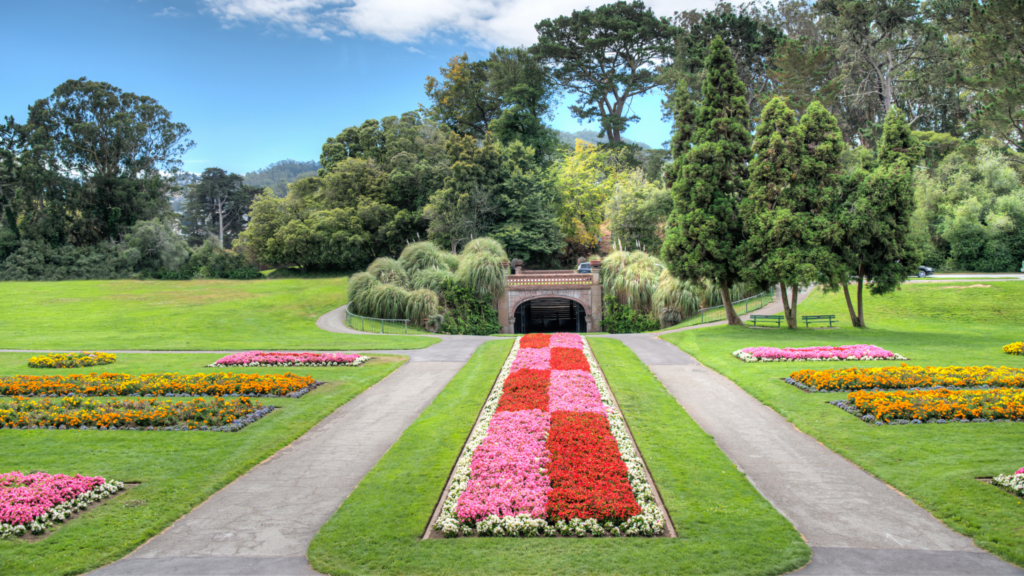
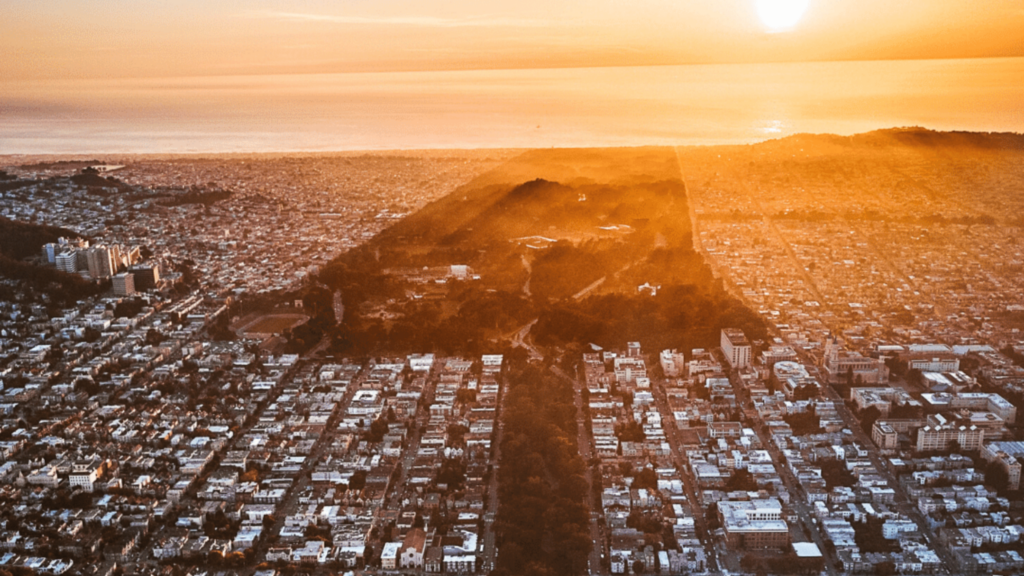
Golden Gate Park is San Francisco’s largest public park and one of the city’s most beloved attractions. Stretching more than three miles from east to west and averaging half a mile wide, the park covers 1,017 acres of gardens, forests, lakes, museums, and open space.
Despite sitting in the middle of one of America’s busiest cities, Golden Gate Park feels surprisingly peaceful. Towering Monterey cypress, eucalyptus, and pine trees block out much of the surrounding city, creating an escape where visitors can stroll wooded paths, paddle across lakes, visit museums, or simply relax on the grass.
Today, the park welcomes millions of visitors each year and serves as a gathering place for locals and travelers alike. It’s a favorite destination for runners, cyclists, photographers, families, birdwatchers, and anyone looking to experience a different side of San Francisco.
The History of Golden Gate Park
It’s hard to imagine today, but Golden Gate Park wasn’t always filled with towering trees, peaceful lakes, and colorful gardens.
In the 1860s, the area west of San Francisco was little more than windswept sand dunes known as the Outside Lands. City leaders dreamed of creating a public park that could rival New York City’s Central Park, but transforming barren dunes into a thriving landscape would take decades of vision and hard work.
Golden Gate Park Timeline
- 1860s: The “Outside Lands” consisted of shifting coastal sand dunes with little vegetation.
- Late 1860s: Landscape architect William Hammond Hall developed the master plan, while park superintendent John McLaren helped bring the vision to life over the following decades.
- April 4, 1870: Golden Gate Park officially opened to the public.
- Early 1900s: New museums, gardens, monuments, lakes, and recreational spaces transformed the park into one of San Francisco’s premier attractions.
- 1906: Following the devastating San Francisco earthquake and fires, Golden Gate Park became a temporary refuge for thousands of displaced residents, providing shelter, food, clothing, and medical care.
From Sand Dunes to an Urban Oasis
Creating Golden Gate Park required an enormous engineering effort. Thousands of trees were planted to stabilize the shifting sand, irrigation systems were built, and roads, lakes, gardens, and walking paths gradually took shape.
Today, more than 150 years later, Golden Gate Park is one of the most visited urban parks in the United States. What began as a bold vision has become one of San Francisco’s defining landmarks, welcoming millions of visitors each year to explore its gardens, museums, trails, and historic attractions.
Top Landmarks and Things To Do Inside Golden Gate Park
With more than 1,000 acres to explore, Golden Gate Park offers something for every type of traveler. These are some of the park’s most iconic attractions.
Conservatory of Flowers
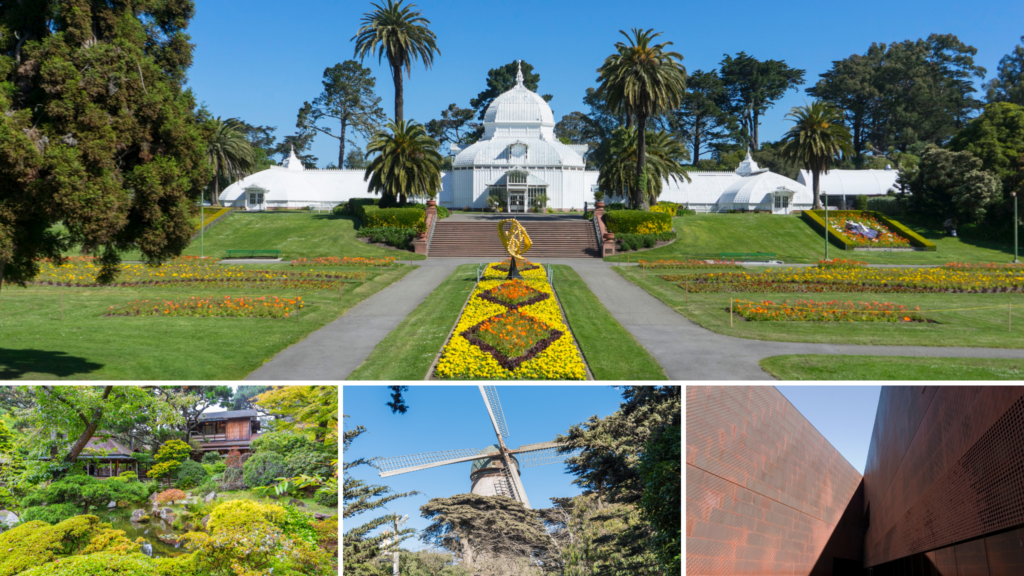
The Conservatory of Flowers is one of the most recognizable buildings in San Francisco and the oldest building inside Golden Gate Park.
Opened in 1879, this stunning Victorian greenhouse houses more than 1,700 species of rare, tropical, aquatic, and exotic plants beneath its iconic white glass structure. It’s also the oldest surviving municipal wooden conservatory in the United States and is listed on the National Register of Historic Places.
Inside, visitors can wander through lush tropical displays, colorful orchid collections, towering palms, and fascinating carnivorous plants. Whether you’re a plant enthusiast or simply looking for one of the city’s most photogenic spots, the Conservatory is well worth a visit.
Japanese Tea Garden
The Japanese Tea Garden is one of Golden Gate Park’s most peaceful attractions and holds the distinction of being the oldest public Japanese garden in the United States.
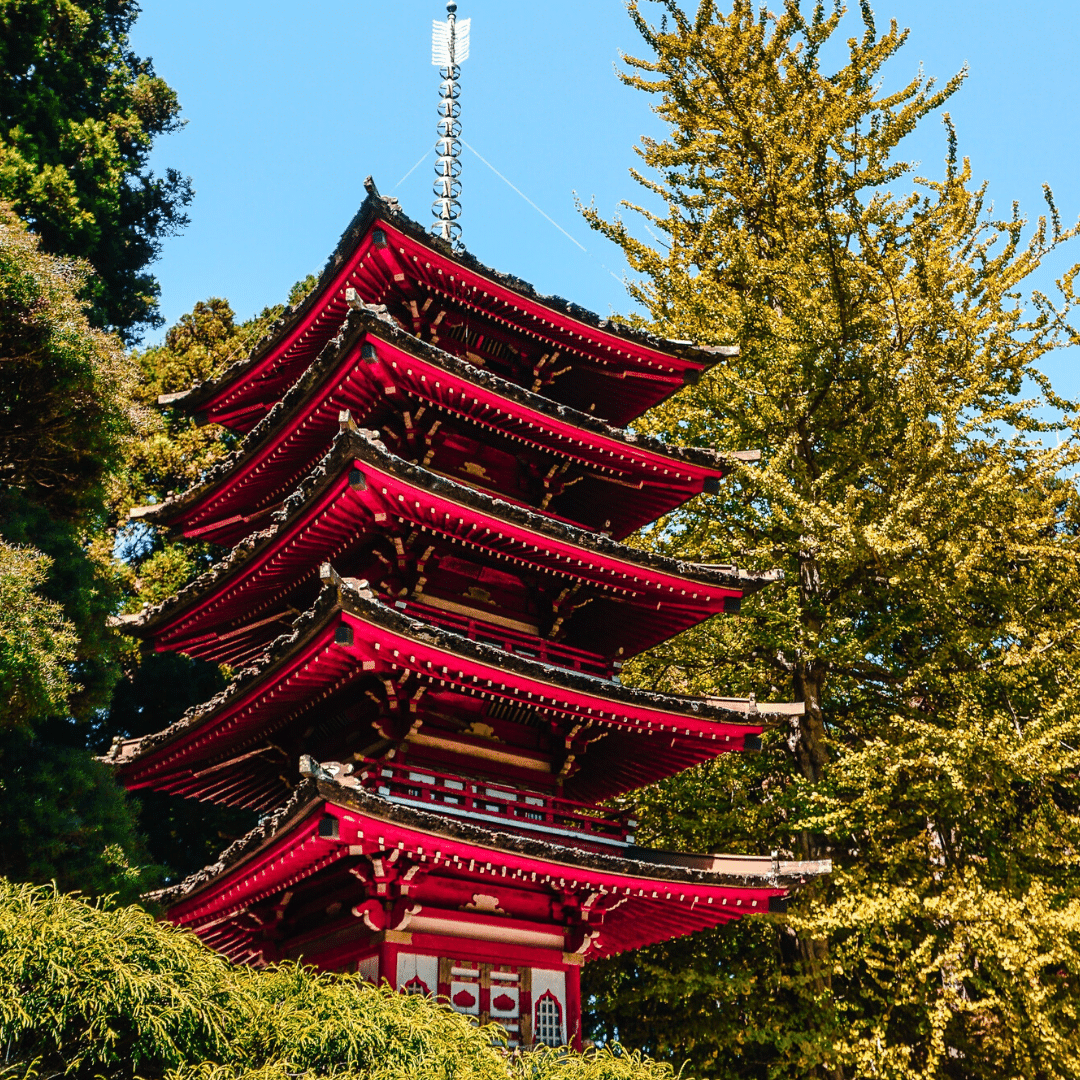
Originally created for the California Midwinter International Exposition in 1894, the garden has evolved into a tranquil retreat featuring koi ponds, arched bridges, stone lanterns, pagodas, meticulously pruned trees, and winding pathways inspired by traditional Japanese design.
Visitors can enjoy tea and traditional Japanese snacks while overlooking beautifully landscaped gardens that encourage slowing down and appreciating nature.
Dutch Windmill & Queen Wilhelmina Garden
Standing near the park’s western edge, the Dutch Windmill is one of Golden Gate Park’s most photographed landmarks.
Completed in 1903, the 75-foot-tall windmill originally pumped groundwater to irrigate the park before electric pumps made it obsolete in 1913. Today, it has been beautifully restored and is recognized as a San Francisco Historic Landmark.
In spring and summer, the surrounding Queen Wilhelmina Garden bursts with thousands of colorful tulips and seasonal flowers, creating one of the most picturesque locations in the park.
Murphy Windmill
Often overshadowed by its larger neighbor, Murphy Windmill is the second historic windmill in Golden Gate Park and was once the largest functioning windmill in the world.
Like the Dutch Windmill, it helped irrigate the growing park before being retired in the early 20th century. Extensive restoration efforts have returned this impressive structure to its former glory, making it another worthwhile stop for history lovers and photographers.
de Young Museum
Art lovers won’t want to miss the de Young Museum, one of San Francisco’s premier cultural institutions.
Its collection spans American art, international textiles, contemporary works, photography, and rotating exhibitions from around the world. Even if you don’t visit the galleries, the museum’s free Hamon Observation Tower offers spectacular 360-degree views of Golden Gate Park, downtown San Francisco, and the Golden Gate Bridge.
It’s one of the city’s best free viewpoints and a hidden gem many visitors overlook.
Best Time to Visit Golden Gate Park
Golden Gate Park is beautiful year-round, but each season offers something a little different.
- Spring brings blooming tulips near the Dutch Windmill, colorful gardens, and comfortable temperatures.
- Summer offers long daylight hours, outdoor concerts, and lively walking paths, although mornings can be foggy.
- Fall often brings San Francisco’s warmest weather, making it one of the best times to enjoy the park.
- Winter is quieter, with fewer crowds and lush green landscapes following seasonal rains.
No matter when you visit, mornings generally offer the best chance to enjoy popular attractions before larger crowds arrive.
Fun Facts About Golden Gate Park
Golden Gate Park is filled with fascinating stories, unexpected attractions, and hidden surprises that many visitors never discover. Beyond its famous museums and gardens, the park has a rich history and plenty of unique experiences waiting around every corner.
Here are some of the most interesting facts to know before you visit.
Golden Gate Park Is Bigger Than Central Park
Many people assume New York City’s Central Park is the country’s largest urban park, but Golden Gate Park is actually larger.
Covering 1,017 acres, Golden Gate Park stretches more than three miles from the Haight-Ashbury neighborhood to Ocean Beach. Within its boundaries are forests, lakes, gardens, museums, sports fields, trails, picnic areas, and dozens of attractions, making it easy to spend an entire day exploring.
It Was Built on Sand Dunes
One of the park’s most remarkable achievements is that it wasn’t created in a forest or meadow.
Before construction began, the area was little more than rolling coastal sand dunes known as the Outside Lands. Thousands of trees were planted to stabilize the shifting sand, and irrigation systems transformed what was once an inhospitable landscape into one of America’s most celebrated urban parks.
It’s hard to imagine today, but nearly every tree you see was intentionally planted as part of one of San Francisco’s most ambitious public works projects.
Bison Have Lived Here for Over 125 Years
Yes, there are real bison living in Golden Gate Park.
The Bison Paddock has been home to an American bison herd since the 1890s, making it one of the park’s most beloved attractions. While the herd has changed over the years, visitors can still stop by to see these incredible animals grazing peacefully just minutes from downtown San Francisco.
It’s one of those experiences that surprises first-time visitors and delights returning locals.
There Are More Than Just a Few Lakes
Golden Gate Park is home to multiple lakes, including the scenic Chain of Lakes near the park’s western end.
These waterways attract ducks, turtles, songbirds, herons, and countless other wildlife species throughout the year. Whether you’re taking a leisurely stroll or enjoying a quiet picnic nearby, the lakes offer a peaceful escape from the city’s busy streets.
If you’re lucky, you may even spot turtles sunbathing on fallen logs or great blue herons hunting along the shoreline.
The de Young Observation Tower Is Free
One of San Francisco’s best panoramic viewpoints doesn’t require a ticket.
The Hamon Observation Tower at the de Young Museum offers sweeping 360-degree views of Golden Gate Park, downtown San Francisco, the Pacific Ocean, and even the Golden Gate Bridge on clear days.
Many visitors skip this free attraction without realizing it’s open to the public, making it one of the city’s best hidden gems.
You Can Learn Lawn Bowling
One of Golden Gate Park’s oldest traditions is still going strong.
The San Francisco Lawn Bowling Club, established in 1901, was one of the first lawn bowling clubs in the United States. Visitors can often watch matches or even participate in beginner lessons, making it one of the park’s most unique recreational activities. It’s a fun reminder that Golden Gate Park offers much more than hiking trails and gardens.

Explore Golden Gate Park with Gray Line San Francisco
Golden Gate Park is one of San Francisco’s most iconic destinations, but it’s just one piece of what makes the city so unforgettable.
If you’re visiting for the first time, a guided tour is one of the easiest ways to experience the city’s highlights without worrying about parking, navigating, or missing hidden gems along the way.
Gray Line San Francisco offers a variety of sightseeing experiences that include or pass through Golden Gate Park, including:
Whether you’re spending one day or a full week in San Francisco, Golden Gate Park is a place you’ll remember long after your trip ends. Wander beneath towering trees, discover historic landmarks, take in breathtaking views, and experience one of America’s greatest urban parks for yourself.
Frequently Asked Questions About Golden Gate Park
Is Golden Gate Park bigger than Central Park?
Yes. Golden Gate Park covers 1,017 acres, making it larger than New York City’s Central Park, which spans approximately 843 acres.
Is Golden Gate Park free to visit?
Yes. Admission to the park is free, and many attractions inside the park, including trails, gardens, playgrounds, the Bison Paddock, and the de Young Museum’s Observation Tower, are free to enjoy.
Some attractions, including the Japanese Tea Garden, Conservatory of Flowers, and California Academy of Sciences, require paid admission.
How long should I spend at Golden Gate Park?
Most visitors spend between 2 and 4 hours exploring the park’s highlights.
If you plan to visit museums, gardens, or multiple attractions, you can easily spend an entire day here.
Can you see Golden Gate Park without a car?
Absolutely. Golden Gate Park is accessible by public transportation, rideshare services, bicycle, and guided tours.
Many visitors choose Gray Line’s Grand City Tour or Hop-On Hop-Off Bus Tour to visit the park while also seeing many of San Francisco’s most famous attractions.